Beyond the Polished Deck: What Investors Really Look For in Early-Stage Startups
Too many founders treat an investor pitch like a high-stakes performance, obsessing over financial forecasts and dense technical jargon. But ask seasoned investors what actually moves the needle, and you’ll hear a very different story.
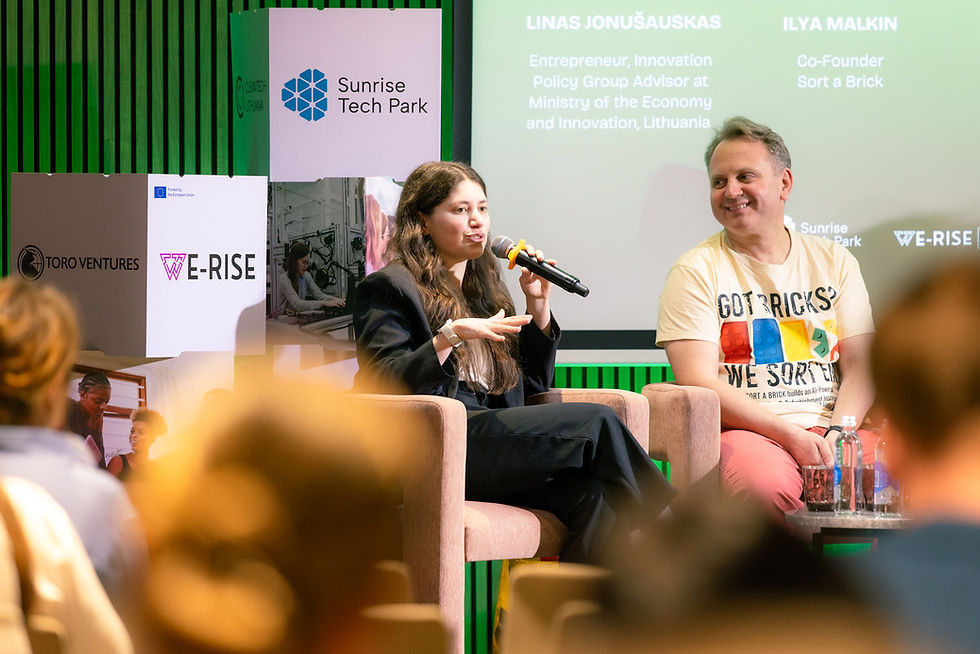
At the WE-RISE PITCH BATTLE panel, which took place during StartupFair 2026 in Vilnius, Lithuania, experts Lina Taletavičiūtė-Misiūnienė, Alex Gibb, and Jovita Žėkaitė broke down what transforms an ambitious pitch into a venture-scale business. Here are the four strategic imperatives every founder needs to know.
Problem-First Over Tech-First
Technical sophistication is impressive, but technology alone doesn't build a business. Overexplaining technical details often signals that a founder struggles to communicate their product vision or market entry strategy clearly.
Focus on Customer Pain: Investors prioritize how deeply founders understand, quantify, and qualify real customer pain points over flashy feature lists.
Keep Communication Simple: Pitch your problem and solution so clearly that anyone can understand it without needing a technical background.
Pitch Deck Realities: Team Resilience & IP Moats
Financial projections in early-stage decks are rarely accurate, and investors know it. Instead of getting lost in speculative spreadsheets, sophisticated investors evaluate two core elements:
Founding Team Resilience: Plans change constantly. Investors back founders who are adaptable, resilient, and capable of pivoting when reality hits.
Defensible IP: Proprietary technology or patents create a competitive moat that reinforces long-term enterprise value.
Avoid "Fluff" Teams: Deep-tech teams composed entirely of scientists without commercial leads - or padded with non-engaged "advisors" - are major red flags that signal a lack of execution capacity.
Skin in the Game & Radical Transparency
Securing capital isn't a transactional payout - it’s entering a 5 to 10-year partnership. Building trust starts on day one:
True Commitment: Investors want to see that founders are fully committed with their time and resources, treating capital as a strategic catalyst rather than "free money".
Air Issues Early: Share material challenges, legal quirks, or team weaknesses upfront rather than letting them surface during due diligence. Demonstrating self-awareness builds far more credibility than pretending to have all the answers.
Build Your Network Before You Need It
The first goal of a pitch deck isn't to close an investment immediately - it's to earn the next conversation.
Warm Ecosystem Relationships: Don't wait until you need capital to introduce yourself. Engage with investors and ecosystem peers early so that when you do raise, the relationship is already grounded in trust.
Face-to-Face Over Email Spacing: Getting out into the ecosystem and having clear, direct interactions is far more effective than endless email follow-ups. Remember: investors are rooting for your success.
TL;DR for Founders:
Solve a quantified pain point before showing off your tech.
Build a balanced team with commercial chops, not just advisors on paper.
Be radically transparent about your weaknesses and legal risks.
Network early: investors back people they know and trust.